Solar-Hybrid RC Aircraft
Tested aircraft propulsion and solar panel output, then modeled a hybrid power system that predicted a 12.1% increase in flight endurance.
What
- Investigated whether solar panels could supplement a model aircraft’s battery and increase flight endurance.
- Characterized aircraft power demand and solar panel output to establish the hybrid system’s power balance.
- Co-led the study, conducted propulsion and panel testing, and modeled the combined battery–solar system.
How
- Conducted propulsion load tests to establish baseline motor power consumption before evaluating solar integration.
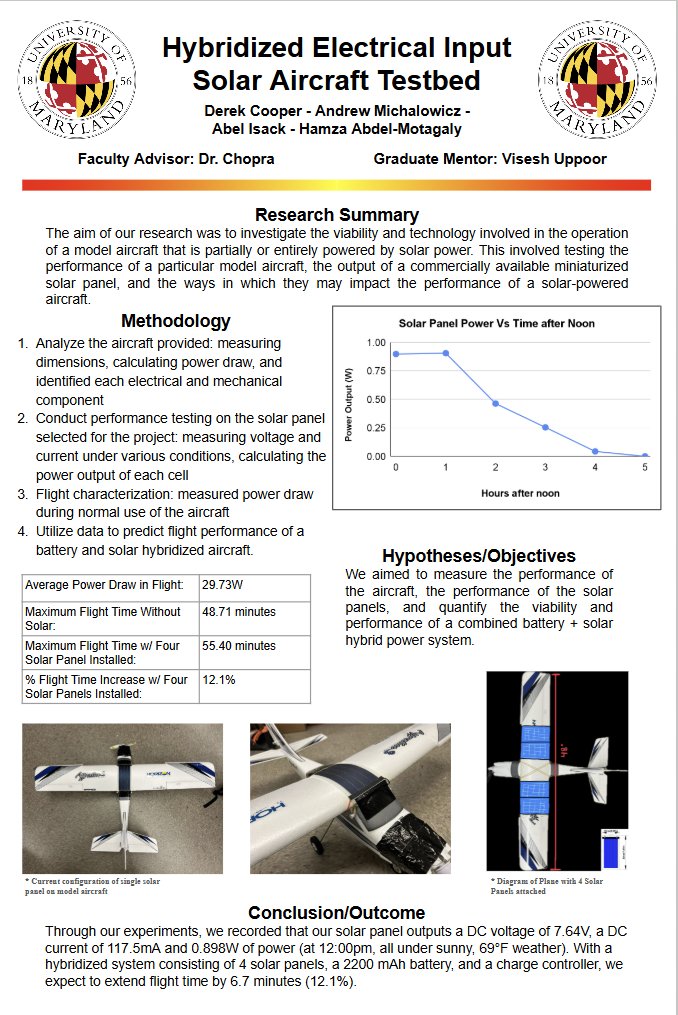
- Measured solar panel voltage and current under varying conditions and calculated electrical power output.
- Characterized aircraft power draw during normal operation to support flight-endurance calculations.
- Modeled a hybrid configuration with four solar panels, a 2200 mAh battery, and a charge controller.
Results
- Recorded an average in-flight power draw of 29.73 W as the baseline for the endurance model.
- Measured 7.64 V and 117.5 mA from the tested panel under sunny noon conditions, corresponding to approximately 0.898 W.
- Estimated an endurance increase from 48.71 to 55.40 minutes with four solar panels—approximately 6.7 additional minutes, or 12.1%.
- Documented the predicted endurance benefit and the decline in solar output across later measurements; reported the gain as a model estimate rather than a demonstrated flight-time increase.